Basic Information
| Field | Details |
|---|---|
| Name | Molly Munger |
| Occupation | Civil-rights attorney, nonprofit leader, education-reform advocate |
| Location | Pasadena, California |
| Education | Radcliffe College at Harvard University; Harvard Law School |
| Early Career | Assistant U.S. Attorney; commercial litigator in private practice |
| Nonprofit Leadership | Founding Co-Director and senior leader at Advancement Project California, now Catalyst California |
| Known For | Primary backer and campaign leader of California Proposition 38 in 2012 |
| Family | Daughter of Charles T. “Charlie” Munger and Nancy Huggins Munger; sister to Wendy Munger and Charles T. Munger Jr., among others |
Biography
California attorney and civic leader Molly Munger transitioned from federal prosecution to high-impact public-interest practice. A Radcliffe College and Harvard Law School graduate, she worked as an assistant U.S. attorney and a commercial litigator in private practice. The rules that shape opportunity are her career focus. She eventually moved from narrow legal challenges to civil rights and school equity coalition activities.
She founded Catalyst California, formerly Advancement Project California, a policy and advocacy organization. She helped design data-driven campaigns to redirect public resources to underserved communities, focusing on education. Technical policy analysis, organizing, and strategic messaging are combined. This hybrid strategy put Munger at the confluence of law, public finance, and politics, leading her to one of California’s most ambitious school funding plans.
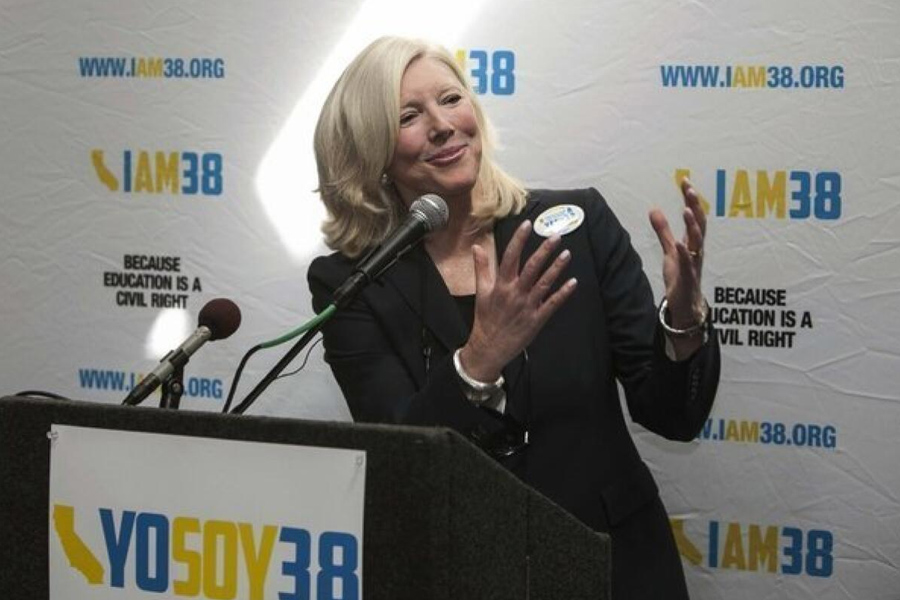
She supported K-12 education income tax hike Proposition 38 in 2012 with her reputation and resources. Although it failed in November 2012, it showed her readiness to combine activism with personal financial commitment. The campaign shaped California’s public school funding debate and brought national attention to a philanthropic family’s internal tensions when her siblings backed conflicting political campaigns.
Family and Public Relationships
Molly Munger’s family is involved in law, investing, and philanthropy. Munger represents Berkshire Hathaway’s boardroom and decades of civic giving. Molly’s path is defined by law and school reform, not capital markets.
| Name | Relation to Molly | Public Identity | Notes |
|---|---|---|---|
| Charles T. “Charlie” Munger | Father | Investor, vice chairman of Berkshire Hathaway, attorney, philanthropist | Frequently cited as one of the most influential American investors; Molly is among his children |
| Nancy Huggins Munger | Mother | First wife of Charlie Munger | Named in family biographies as the mother of Molly and several siblings |
| Wendy Munger | Sister | Lawyer, trustee, philanthropist | Publicly identified in family and institutional profiles |
| Charles T. Munger Jr. | Brother | Political donor and philanthropist | Notable for major spending in California’s 2012 ballot measures, at times counter to Molly’s campaign |
| Alfred C. Munger | Grandfather | Family of origin for Charlie Munger | Appears in public genealogical records |
| Florence V. “Toody” Russell Munger | Grandmother | Family of origin for Charlie Munger | Appears in public genealogical records |
| Carol Munger | Aunt | Member of extended Munger family | Listed in family profiles |
| Mary Munger | Aunt | Member of extended Munger family | Listed in family profiles |
Molly’s family context is often mentioned in media coverage, particularly when major philanthropic or political expenditures are involved. Even so, her day-to-day public footprint is centered on nonprofit leadership and policy work, not the corporate sphere.
Career and Achievements
- Early legal training at Harvard Law School positioned Munger for a high-responsibility legal career. She served as an assistant U.S. attorney where she handled federal cases that sharpened her sense for systemic levers and institutional structure.
- After a period as a private litigator focused on commercial disputes, she pivoted to public-interest law. The move reflected a broader ambition: change the math of opportunity by changing the rules and flows of public funding.
- As a founding co-director of Advancement Project California, she helped establish a toolkit of policy analysis, storytelling, community organizing, and legal advocacy. The organization later became Catalyst California, with a continuing focus on racial justice and education equity.
- Her leadership roles emphasize education as both an individual right and a public good. In strategy documents and public remarks, the emphasis has consistently been on measurable gains for students and communities through public finance reform.
Proposition 38 and Public Spending
California voters faced conflicting education funding proposals in 2012. Proposition 38, by Molly Munger, will raise taxes for K-12 classrooms with clear allocations and local impact. The policy formulation and her personal financial support made the campaign notable. Molly’s siblings spent extensively in the same cycle, with official estimates putting their 2012 political spending at 54 million dollars.
Proposition 38 failed in November 2012. However, the campaign’s demand for a safeguarded school revenue stream changed education finance conversation. It also emphasized the ballot-box policymaking conflict between broad coalitions and policy specificity. Munger advocated clarity and targeted funding. California’s political incentives supported flexibility and bigger tents. Reformers who want to codify budget blueprints should learn from the experience.
Recent Public Mentions
- The passing of Charlie Munger in 2023 renewed public interest in the family’s philanthropic and civic footprint. Coverage that revisited his life often listed his children, including Molly, and noted the family’s varied public endeavors.
- Organizational profiles continue to present Molly’s ongoing board and advisory roles at Catalyst California and similar initiatives focused on education equity and racial justice.
- She does not maintain a high-volume personal social media presence. Her public visibility tends to emerge through nonprofit websites, interviews related to education finance, and historical reviews of the 2012 ballot campaigns.
Timeline
| Year | Event |
|---|---|
| 1970s to early 1980s | Undergraduate studies at Radcliffe College at Harvard University |
| 1980s | Harvard Law School; entry into legal practice |
| Late 1980s to 1990s | Service as an assistant U.S. attorney; transition to private commercial litigation |
| 1990s to 2000s | Shift to public-interest law and civil-rights advocacy in California |
| 2000s | Founding co-director role at Advancement Project California, later known as Catalyst California |
| 2012 | Serves as the primary backer and public face of Proposition 38, an education funding initiative on the California ballot |
| 2013 to 2020s | Continued nonprofit leadership, board service, and philanthropic work centered on education equity |
| 2023 | Renewed public mentions in the context of Charlie Munger’s legacy and the family’s civic activities |
Public Footprint and Approach
Lawyerly accuracy and campaigning urgency characterize Molly Munger’s public approach. Though she prefers data tables and financial formulae to slogans, she knows budgets are moral documents. She frames difficulties by defining authority, mapping statutory restrictions, and finding leverage points to turn aspiration into line items, showing her legal knowledge. She introduced Proposition 38 because she believed education deserves more than just more money. It deserves a secure cash stream that can weather election cycles and recessions.
Her charity leadership has also been characterized by a strong emphasis on structure. At Catalyst California, the work frequently entails transforming data into power, and then power into policy. That includes tracking where monies go, identifying underrepresented pupils, and developing allocation models that address long-standing inequities. The method may appear technocratic, but it is grounded in the lived realities of classrooms and communities that have waited for justice to arrive.
Legacy and Context
Munger family public life is varied. Investing, decision-making architecture, and charity are Charlie Munger’s legacy. Some of Molly’s siblings have been prominent politicians and civic activists, sometimes uniting with her and sometimes following their own path. Molly’s focus on education equity and public financing distinguishes her. The 2012 political theater showed a single family’s disagreements over public policy. That episode illuminates money in politics and the difficulty of school finance consensus.
Molly Munger is a landmark for California policymakers who believe educational equity needs moral reasoning and fiscal sustainability. Although Proposition 38 failed, it changed policy discussions. In the 2020s, the state’s pledge to kids requires more than goodwill. It relies on how monies are raised, counted, and protected.
FAQ
Who is Molly Munger?
She is a Pasadena-based civil-rights attorney and nonprofit leader best known for education equity work and for leading the Proposition 38 campaign in 2012.
What is Proposition 38?
Proposition 38 was a 2012 California ballot measure that sought to raise income taxes to fund K-12 education with dedicated revenues; it did not pass.
What organizations has she led?
She was a founding co-director of Advancement Project California, which later became Catalyst California, and has remained involved in leadership and board roles.
What is her legal background?
She graduated from Harvard Law School, served as an assistant U.S. attorney, and practiced as a commercial litigator before shifting to public-interest work.
How is she related to Charlie Munger?
She is one of the children of Charles T. “Charlie” Munger, the longtime vice chairman of Berkshire Hathaway.
Does she have a public net-worth figure?
There is no widely accepted, independently verified public net-worth figure for her.
Is she active on social media?
Her public presence is limited on personal social media; most visibility comes through nonprofit work and media coverage of education policy.