Basic Information
| Field | Detail |
|---|---|
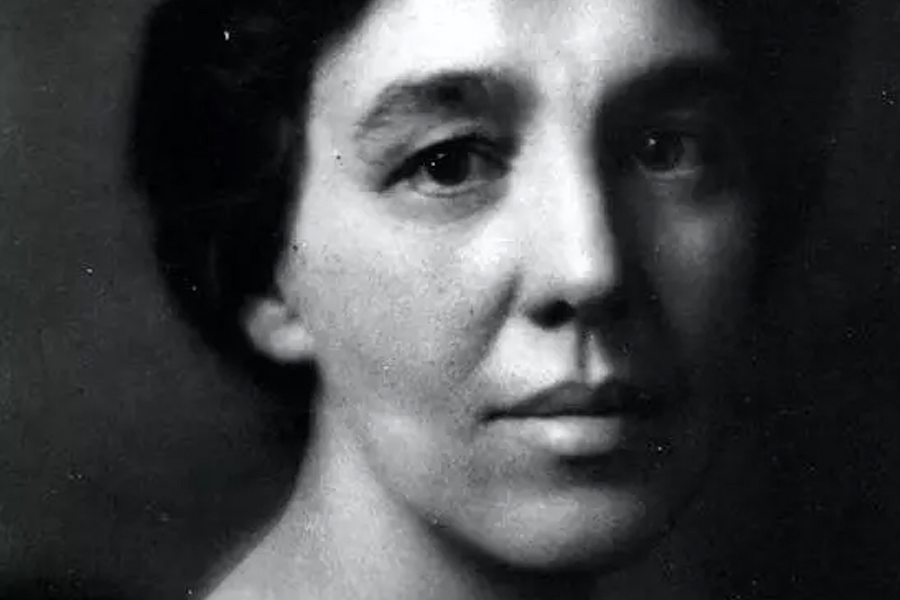
| Full name | Marian Hubbard Bell Fairchild |
| Nickname | Daisy |
| Birth | February 15, 1880, Washington, D.C. (some records cite September 24, 1880) |
| Death | 1962, often reported as September 24; location reported as Baddeck, Nova Scotia, or Miami, Florida |
| Parents | Alexander Graham Bell and Mabel Gardiner Hubbard |
| Siblings | Elsie May Bell; two brothers who died in infancy |
| Spouse | Dr. David Grandison Fairchild, married April 25, 1905 |
| Children | Alexander Graham Bell Fairchild (1906-1994), Barbara Lathrop Fairchild (1909-1998), Nancy Bell Fairchild (1912-1976) |
| Residences | Washington, D.C.; Beinn Bhreagh near Baddeck, Nova Scotia; Coconut Grove, Florida |
| Notable roles | Family matriarch, collaborator in natural history, steward of The Kampong |
| Publications | Co-author, Book of Monsters (1914) |
| Legacy sites | The Kampong, now part of the National Tropical Botanical Garden |
Early Life in an Inventive Household
The home where Marian Hubbard Bell was born treated ideas as living things. Alexander Graham Bell, her father, combined telephonic innovations with a lifetime of deaf teaching. Mabel Gardiner Hubbard, her mother, managed complex finances, promoted access and education, and maintained the family’s social and philanthropic circle.
The Bells spent summers at Beinn Bhreagh, their home in Baddeck, Nova Scotia, and Washington, DC. Marian’s upbringing was filled with prototypes, experiments, and scientists, instructors, and friends. Late 1880s photos show a poised toddler with a dog and a world of nature and invention. Although her formal schooling is scarce, her home provided a rich education: languages and literature from her grandparental lineage, Visible Speech from her paternal grandfather Alexander Melville Bell, and the unspoken expectation that curiosity should be a habit.
Marriage, Travel, and the Making of a Shared Life
Marian married Dr. David Grandison Fairchild, a pioneering botanist and plant explorer connected to the U.S., on April 25, 1905. The USDA transformed American orchards, groves, and gardens. The couple had complementary temperaments. His life’s work required extended trips and scrupulous record-keeping. Her strengths were support, organization, camaraderie, and attention to detail.
Together, they traveled widely. Post-1905 itineraries resembled a botanist’s atlas. With monastic patience, the duo collected seeds, studied soils, and observed microclimates. Their collaboration culminated at home, where imported plants found a stage and story.
The Kampong: A Tropical Garden That Became a Legacy
The Fairchilds established The Kampong, an eight-acre tropical garden on Biscayne Bay, in Coconut Grove, Florida, in the 1910s. The name evokes Southeast Asian compounds and the estate’s community, refuge, sanctuary. Mangos, avocados, and uncommon tropicals coexisted alongside beautiful trees and experimental plantings in this living collection. Some innovations changed American taste and agriculture. Others were thrilled.
The home order that enabled science shows Marian’s influence. As a working estate and residence, the Kampong kept records, labeled photos, and guided visitors. Friendship and fieldwork overlapped there. It is now a conserved landscape, proving gardens can be laboratories and chronicles.
Writing and Quiet Contributions
Marian made significant contributions to natural history despite not being paid. She and David wrote the illustrated Book of Monsters in 1914 on insects. The title’s theatrical flare hides a careful study into ignored lives. It follows Marian’s pattern of advancing comprehension without attention.
Her published collaborations were matched by the countless uncredited tasks that make intellectual life possible. Pack lists, field notes, typed manuscripts, and hospitality do not often earn titles pages. Yet they are the soil from which books and discoveries grow.
Family Web: Parents, Sibling, and Children
Marian’s family connections read like an index to a chapter of American innovation and reform.
- Father: Alexander Graham Bell (1847-1922), inventor of the telephone and educator of the deaf, fostered a home where failure was data and curiosity a duty.
- Mother: Mabel Gardiner Hubbard (1857-1923), businesswoman and advocate for the deaf, steered the family’s finances and championed access long before it became standard.
- Sister: Elsie May Bell (1878-1964), who married Gilbert Hovey Grosvenor, an early editor of National Geographic, extended the family’s footprint into media and education.
- Children: Alexander Graham Bell Fairchild (1906-1994), who pursued science and entomology; Barbara Lathrop Fairchild (1909-1998), who helped maintain family estates and traditions; Nancy Bell Fairchild (1912-1976), who participated in preserving family history.
Two infant brothers, Edward and Robert, died young. Their loss shadowed the otherwise robust family story and deepened the bonds among the surviving children.
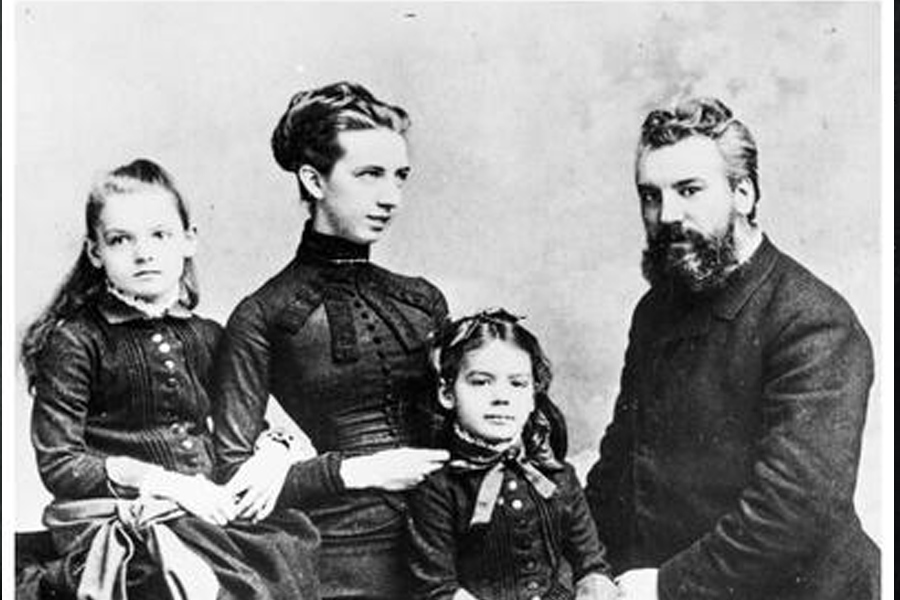
Family at a Glance
| Relation | Name | Years | Notability |
|---|---|---|---|
| Father | Alexander Graham Bell | 1847-1922 | Inventor and educator |
| Mother | Mabel Gardiner Hubbard | 1857-1923 | Advocate, business manager |
| Sister | Elsie May Bell | 1878-1964 | Married Gilbert H. Grosvenor of National Geographic |
| Spouse | David Grandison Fairchild | 1869-1954 | Botanist and plant explorer |
| Son | Alexander G. B. Fairchild | 1906-1994 | Scientist, entomology interests |
| Daughter | Barbara Lathrop Fairchild | 1909-1998 | Family stewardship |
| Daughter | Nancy Bell Fairchild | 1912-1976 | Family history preservation |
A Timeline of Key Dates
| Year | Event | Detail |
|---|---|---|
| 1880 | Birth | February 15 in Washington, D.C. (some records cite September 24) |
| 1880s-1890s | Summers in Nova Scotia | Family at Beinn Bhreagh near Baddeck |
| 1905 | Marriage | April 25, Marian weds David G. Fairchild |
| 1906 | First child | Birth of Alexander G. B. Fairchild |
| 1909 | Second child | Birth of Barbara Lathrop Fairchild |
| 1912 | Third child | Birth of Nancy Bell Fairchild |
| 1914 | Publication | Book of Monsters co-authored with David Fairchild |
| 1920s-1930s | Florida residence | Coconut Grove-Miami area established as home base |
| 1954 | Widowhood | Death of David G. Fairchild |
| 1962 | Death | Marian dies at age 82, often reported as September 24 |
Wealth, Status, and Public Image
The Bell family’s telephone patents and her parents’ cautious stewardship made Marian’s life financially comfortable. Marian has no known net worth or personal fortune independent of family holdings. Scandals and sensational headlines are absent. A private woman who prioritized family, hospitality, and daily labor to make a science-friendly house is described.
A Household That Made Science Possible
A kitchen-table planning matrix underpinned every mission. Marian’s practicality matched David’s field goals. She helped turn lists and letters into logistics and welcomed colleagues to Florida for advise, seeds, or dinner. Even 1920 and 1930 census photos of the family in Coconut Grove and Miami suggest a stable base. No glamour in the rhythm. It held stable. That steadfastness counted.
Roots and Routes: Washington, Baddeck, Coconut Grove
Marian was molded by three places. She engaged with policy and her father and husband’s professional networks in Washington, D.C. She had a vast landscape and summer imagining lab at Beinn Bhreagh in Nova Scotia. The pair experimented with plants in Coconut Grove. These venues formed a triangle that shaped her private life and her family’s public work.
Continuing Remembrance
Marian appears whenever The Kampong is mentioned or photographed, despite her 1962 death. Garden tours still mention her influence on the estate. Anniversary and social media posts periodically feature Marian from the 1920s and 1930s, connecting prior caregivers to current ones. The pattern fits. Her legacy was a thread, not a headline. It’s obvious in a preserved landscape, a weathered insect book, and how families remember those who supported others’ work.
FAQ
Why is Marian Hubbard Bell notable?
She was the daughter of Alexander Graham Bell and the spouse of botanist David Fairchild, contributing to natural history and the creation of The Kampong.
Did Marian have a formal career?
No, she did not pursue a paid career, focusing instead on family, travel, and collaborative support.
What did she publish?
She co-authored Book of Monsters in 1914, an illustrated work on insects.
Whom did she marry?
She married Dr. David Grandison Fairchild on April 25, 1905.
How many children did she have?
She had three children between 1906 and 1912.
What is The Kampong?
The Kampong is the Fairchilds’ eight-acre tropical garden in Coconut Grove, now preserved as part of a national botanical network.
Where did Marian live most of her life?
She divided her time among Washington, D.C., Beinn Bhreagh in Nova Scotia, and Coconut Grove, Florida.
Was she ever involved in controversies?
No, records portray a private, scandal-free life.
When was she born?
She was born in 1880, commonly given as February 15, with some records citing September 24.
When did she die?
She died in 1962, often reported as September 24, with sources differing on the location.